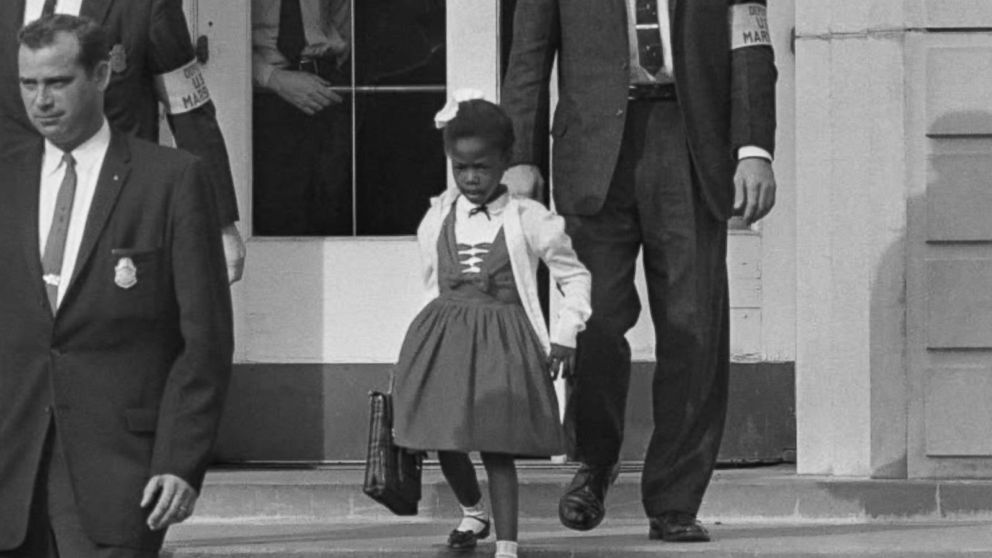
On May 17, 1954, the United States Supreme Court decided on the landmark case of Brown v. The Board of Education of Topeka. In their decision, the Supreme Court unanimously ruled that segregation in public schools was unconstitutional. This victory was fuel for the Civil Rights Movement. In 1955 Rosa Parks refused to give up her seat on a bus, which led to the Montgomery Bus Boycott. Soon to be followed by the Civil Rights Act of 1964, the Voting Rights Act of 1965, and the Fair Housing Act of 1968.
While Brown was crucial in overturning the separate but equal doctrines that permeated nearly every aspect of society, we have still not arrived. One of the consequences of Brown was the loss of many black educators. This post is designed to bring insight into the treatment that many black educators were met with after Brown, and to look at how black students perform when they are racially matched with at least one teacher. This is in no way an advocation for segregation. I think desegregation is something we all can support.
In his article Adam Fairclough (2006) recalled a statement by Horace Tate. Horace Tate was a black educator and former head of the Georgia Teachers and Educators Association. Fairclough says:
Before integration, he [Tate] recalled, black teachers, commanded little respect from whites. They made do with more hand-me-down textbooks, taught a limited curriculum, and worked in grossly inadequate school facilities. Nevertheless, although blacks enjoyed superior buildings, and expanded curriculum, and better equipment after integration, Tate doubted that the overall quality of education had improved at all … ‘Leaving us alone to teach our children…may not have been such a bad idea’ (p.2).
This provides some insight into the thoughts of one of the premier black educators, and an attitude that was not highly uncommon among his colleagues.
Some of this attitude may spring from the treatment that many black educators received after the Supreme Court decision on Brown. This key piece of legislation, which mandated school districts to desegregate their student populations, did nothing to protect the jobs of black educators. Before Brown, there were roughly 82,000 black educators in America, a decade later, that number had been reduced to 40,000 (Oakley, Stowell, & Logan, 2009). Roughly 38,000 black educators lost their jobs due to the desegregation of schools. In the 1970s, new laws were passed that enacted more strict requirements on teachers and further reduced the number of black educators in America (Tillman, 2004). Yet, given this, none of the Civil Rights legislation that was passed provided any protection for black educators.
When desegregation took place, it did not mean the closing of white schools; it resulted in closing black schools. This often ended with black educators losing their jobs. Although this may not have been direct firings, there were specific tactics used to skirt some attempted legal action used by the National Education Association (NEA) and teacher unions (Fultz, 2004). Some of these tactics included reassigning black teachers to specific schools, while white teachers had the privilege to choose which school they wanted to go. When white schools did not qualify for funds under the Elementary and Secondary Act of 1965, many black teachers were told that their jobs were cut by the federal government (Oakley, Stowell, & Logan, 2009). Other methods included: abolishing tenure laws where there was a high concentration of black teachers, firing teachers without cause, replacing retiring black teachers with white teachers, and placing black teachers in content areas outside of their expertise and then ruling them incompetent (Futrell, 2004). These tactics worked. During the 1960s and 70s, the number of black teachers declined significantly. In his research on the topic, Hooker (1971) stated that in Alabama, one-third of the 10,500 black teachers were dismissed, reassigned, or pressured to resign.
Another disadvantage to black teachers was the increased standards that teachers needed to gain certification. Hooker (1971) found that one of these disadvantages was a mandatory exam that many states forced their teachers to pass; this was the National Teacher Examination or NTE. The evidence shows that districts utilized the NTE, primarily in the south, to justify not paying black teachers equitable salaries dating back to the 1940s (Fultz, 2004). Middle-class white educators designed the NTE for middle-class white educators, and many of the items on the exam had nothing to do with teaching ability. Subsequently, any teacher who did not receive an acceptable score on the NTE was dismissed (Oakley, Stowell, & Logan, 2009).
Black teachers were not the only group heavily impacted by these tactics. Black Principals also felt the same pressure that many of the teachers faced. There was pressure placed on many of these white schools that were being integrated with black students not to allow white students to be under the authority of black principals (Oakley, Stowell, & Logan, 2009). For example, in North Carolina, there were 227 black high school principals in 1963. By 1970, just seven years later, that number was reduced to eight even though the number of high schools increased by 311. Yet, there was never any legislation passed to protect black educators.
The evidence suggests that there was a concerted effort to root out black educators in the decade that followed Brown v. Board of Education. This should be concerning for us not only on a social level but also on an educational level. Fast-forward to our present educational system, and we see some of the effects of the mistreatment of black educators still present. The number of black teachers compared to the number of black students today is disproportionate. According to recent data by the Department of Education 15% of public-school students are black, while only 7% of teachers are black (Some estimates say that only 2% are black males). Additionally, Cherng and Halpin (2016) stated that in New York City, over 85% of the students are of racial minorities. Yet, only 40% of the teaching staff are minorities. That is a 45% difference!
Why is this important? This is important because research shows that when black students have black teachers they’re more likely to achieve academic success. Having one black teacher increased black students’ likelihood of enrolling in college by 13% (Gershenson et al. 2017). Researchers have also found that having two black teachers increased the probability of attending college by 32% and dropped the possibility of dropping out by 29% (39% for boys). Egalite, Kasida, and Winters (2015) found that when black students had black teachers, their scores in math and reading increased.
When a black student sits under the instruction of a black teacher they are more likely to experience academic success. Additionally, data also shows some disturbing trends concerning white teachers and their attitude toward students of color. Multiple studies have shown that white teachers evaluate black students’ behavior and academic potential more negatively than white students (McGrady & Reynolds, 2013). This is not to say that there is inherent racism on the part of all white teachers, rather its unconscious racial bias. Unconscious racial bias are stereotypes that we hold about certain groups that we may not even know we possess. This was evidenced by the fact that McGrady and Reynolds also found that white teachers rated Asian students more favorably than white students.
In the case of black teachers, McGrady and Reynolds (2013) found that there was little to no difference in the way that they rated black and white students. Interestingly, the researchers found that black teachers hold black students to higher expectations than white teachers do. The findings support the idea of Cultural Capital Theory. This is the idea that the difference in the racial background puts more of a constraint on interactions compared to when racial matching exists.
These are just a few studies that demonstrate the critical role that black teachers play in the lives and education of black students. There are 34 states that have a demographic divide of 20% or greater (Boser, 2014). The gap that exists between the number of black students and black teachers is an issue that needs to be addressed in the educational community, yet the numbers seem to suggest that the divide might be increasing. To better serve minority students, we need to work to reduce this gap.
Do not misunderstand me, I do not blame all the issues that we see in our educational system on Brown; nor am I suggesting that it was a wrong decision. I believe the decision to desegregate schools was right and just; however, the execution of Brown gave no thought about the future of black educators. It is my opinion that many of the flaws that the educational world experienced in the implementation of desegregation are manifesting themselves 65 years later.
The decision by the Supreme Court to rule segregation unconstitutional was the right decision. And although we are not legally segregated in school, do not be mistaken we have not arrived. We are more segregated than ever! Albeit not the point of this article, we are segregated by socioeconomic lines rather than racial. We need to address this issue in our schools, but what we cannot do is repeat the mistakes that marginalized a portion of our teachers.
References:
Boser, U. (2014). Teacher diversity report: A new state-by-state analysis. https://cdn.americanprogress.org/wp-content/uploads/2014/05
/TeacherDiversity.pdf
Cherng, H. & Halpin, P. (2016). The importance of minority teachers: Student perceptions of minority versus white teachers. Educational Researcher, 45(7), 407-420. doi:10.3102/0013189×16671718
Egalite, A., Kisida, B., & Winters, M. (2015). Representation in the classroom: The effect of own-race teachers on student achievement. Economics of Education Review., 45, 44-52. doi:10.1016/j.econedurev.2015.01.007
Fairclough, A. (2006). The cost of brown: Black teachers and school integration. The Journal of American History, 91(1). Retrieved from: http://www.historycooperative.org/journals/jah/91.1/fairclough.html
Fultz, M. (2004). The displacement of black educators post-Brown: An overview and analysis. History of Education Quarterly, 44(1), 1-27. doi:10.1111/j.1748-5959.2004.tb00144.x
Futrell, M. (2004). The impact of the brown decision on African American educators. In J. Anderson & D. Byrne. (Eds). The Unfinished Agenda of Brown v Board of Education. Hoboken, NJ: Wiley.
Gershenson, S., Hart, C., Lindsay, C., & Papgeorge, N. (2017). The long-run impacts of same-race teachers. The National Bureau of Economic Research. doi:10.3386/w25254
Hooker, R. (1971). Displacement of black teacher in the eleven southern states. Afro-American Studies, 2, 165-180. Retrieved from:https://files.eric.ed.gov/fulltext/ED047036.pdf
McGrady, P. & Reynolds, J. (2013). Racial mismatch in the classroom: Beyond black-white differences. American Psychological Association, 86(1), 3-17. doi:10.1177.0038040712444857
Leave a Reply